 Skip to content
A clean car is not just about shiny paint and vacuumed carpets, it should smell fresh too. Yet stubborn odors from cigarette smoke, pet accidents, food spills, or moisture often stay inside after basic cleaning. Air fresheners may hide the problem for a short time, but they do not remove the source.
This is where ozone treatment for car interiors makes a difference. It uses a special gas called ozone to break down the tiny particles that cause odors. Instead of covering the smell, ozone destroys it at the source.
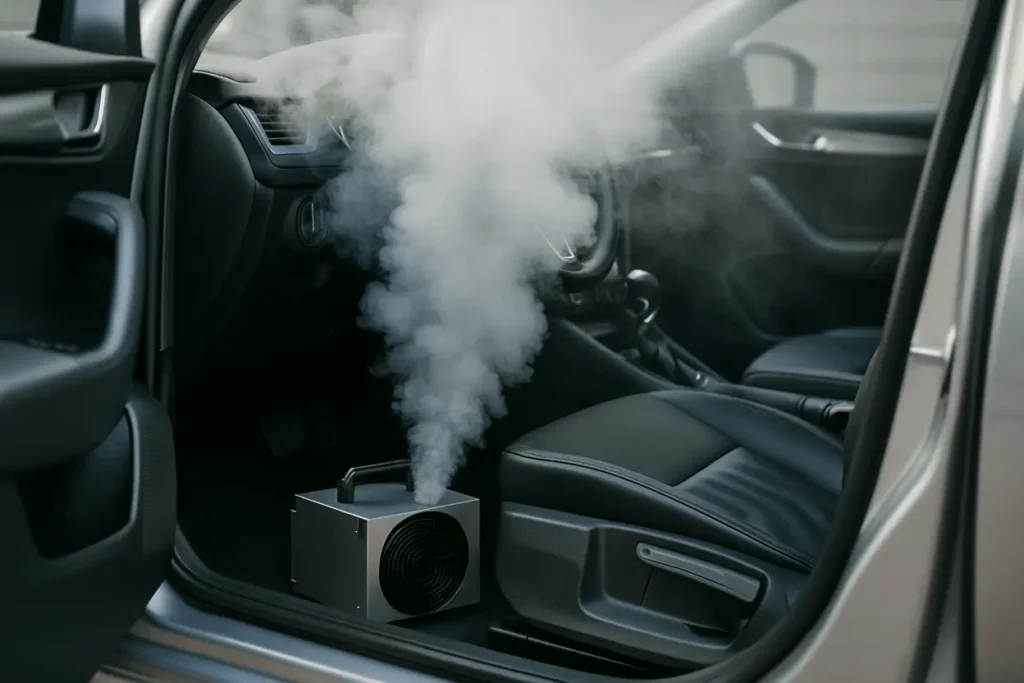
Professional detailing services use ozone generators designed for vehicles. Whether it is smoke trapped in upholstery, pet odors in carpets, or mildew in air vents, ozone reaches deep into places traditional cleaning cannot. This makes the car smell fresh again and also helps sanitize the air. When done safely, following EPA guidelines, ozone cleaning is one of the most effective ways to get rid of stubborn odors for good.
Why Air Fresheners Are not Enough
Air fresheners only cover up smells with perfume. They do not reach the source of the problem hiding in seats, carpets, or vents. Once the fragrance fades, the bad odor comes back.
Smells from smoke, pets, food, or moisture are made of tiny particles that stick to fabrics and surfaces. A traditional air freshener cannot break those particles down, it just mixes with them.
The Environmental Protection Agency EPA notes that strong oxidizing power of ozone can break down the compounds behind stubborn odors. At the same time, it warns that ozone must be used carefully. This is why many drivers rely on professional detailing services, where trained experts operate ozone generators safely, manage exposure, and ventilate the car properly.
What is Ozone Treatment?
Ozone treatment uses a special form of oxygen called ozone (O3). Unlike the oxygen we breathe (O2), ozone has three oxygen atoms. This extra atom makes it unstable and highly reactive, which is why it can attack and break down things that cause bad smells.
The Science Behind Ozone Gas
When ozone meets odor particles inside your car, a process called oxidation happens. The ozone gas touches the smelly particle, and one oxygen atom breaks away. That free atom sticks to the odor compound and changes it into something that no longer smells. After this, the leftover oxygen turns back into normal air (O2). This process is powerful because it does not just cover up odors, it destroys them at the source.
How Ozone Generators Work in Car Detailing
In car detailing, ozone generators are used to tackle odors that normal cleaning cannot remove. Instead of covering smells like air fresheners do, ozone works by breaking down the actual particles that cause them.
A major advantage of ozone cleaning is that it also sanitizes the air inside the car. Ozone acts as a strong disinfectant, helping to kill bacteria, mold, and mildew. This makes it especially useful for vehicles that have been exposed to damp conditions or have developed musty odors over time.
With proper treatment, ozone can completely clear out unpleasant smells leaving the interior fresh and healthier to breathe.
Benefits of Ozone Treatment for Cars
Ozone machines bring unique advantages that regular cleaning methods cannot match.
- Odor removal at the source: Smells from smoke, pets, food, or dampness often cling to fabrics and vents. Ozone breaks down the actual particles causing these odors, leaving the cabin fresh instead of perfumed.
- Healthier interior air: Beyond odor control, ozone acts as a disinfectant. It helps reduce bacteria, mold, and mildew, creating a cleaner environment for anyone sensitive to allergies or breathing issues.
- Longer‑lasting freshness: Unlike sprays that fade quickly, ozone treatment keeps the car smelling clean for much longer. It is a reliable option for drivers who want results that last well beyond a few days.
Safety First: Using Ozone the Right Way
Ozone is powerful, but it must be used carefully.
Why Ozone Can Be Harmful
Breathing ozone directly can irritate lungs. That is why people should never stay inside the car during treatment.
Proper Ventilation After Treatment
After the process, the car must be aired out. Opening doors and windows lets leftover gas escape.
Safe Usage Guidelines (EPA Recommendations)
The EPA warns that ozone should only be used in empty spaces. Following safety rules ensures the process is effective and harmless.
DIY vs Professional Ozone Treatment
You can try ozone cleaning at home, but professionals often get better results.
- DIY ozone treatment: Small portable machines are available. They work for light odors but may not reach deep areas.
- Professional ozone treatment: Detailers use stronger, professional-grade generators. They know how long to run the machine and how to ventilate safely.
If the smell is mild, DIY might be enough. For smoke or mold, call the pros.
How Professional Ozone Treatment Works
Professional ozone cleaning follows a careful process to make sure odors are removed safely and effectively.
1. Preparation
The interior is cleaned first by vacuuming carpets, wiping seats, and removing dirt or debris. This step helps ozone reach deeper layers where smells hide.
2. Ozone Generation
A high‑grade ozone machine is placed inside the closed car. It changes normal oxygen (O2) into ozone (O3). Professional units are stronger than consumer models, producing much more ozone for tough odors.
3. Treatment Time
Depending on how strong the smell is and the size of the vehicle, the machine runs for 30 minutes to 2 hours. During this time, ozone spreads through fabrics, carpets, vents, and even small crevices.
4. Ventilation
After treatment, doors and windows are opened to let the gas escape. This step is important because breathing ozone can be harmful. Proper airing out makes the car safe to enter again.

5. Final Check
Once the air clears, the detailer inspects the interior. By then, ozone has already turned back into normal oxygen, leaving only a fresh, odor‑free cabin.
How Long Does Ozone Treatment Take?
The time depends on the car size and odor severity.
- A small car with a light odor may take 30-60 minutes.
- A larger SUV with heavy smoke may need several hours.
Knowing how long to run the generator is key, too short will not work while too long can damage materials.
Ozone Generators vs. Other Odor Removal Methods
There are many ways to deal with car odors, but ozone cleaning stands out because it goes deeper and lasts longer.
Steam Cleaning
Steam is great for washing surfaces and killing germs, but it mostly works where the steam can touch. Smells hidden in vents or deep inside fabrics often remain. Ozone gas, on the other hand, spreads everywhere even into tiny spaces making odor removal more complete.
Shampooing
Shampooing carpets and seats can clean stains and reduce surface smells. However, it usually needs extra deodorizing sprays to fight stronger odors. Ozone treatment is different because it breaks down the actual odor molecules, not just covers them.
Air Fresheners
Sprays and hanging fresheners are quick fixes, but they only hide smells for a short time. Even air purifiers with filters can miss the root cause. Ozone neutralizes odors at the molecular level, giving a long‑term solution for stubborn smells like smoke or mildew.

Limitations of Ozone Generators
Ozone machines are powerful for removing odors, but they are not a perfect solution.
When ozone may not work
If the smell comes from a deeper issue like an oil leak, fuel spill, or heavy mold growth hidden behind panels, ozone alone cannot fix it. In these cases, the root problem must be repaired before odor removal is possible. Results can also vary depending on how strong or stubborn the smell is.
Risks of improper use
Breathing ozone can be harmful. If the car is not ventilated properly after treatment, it may cause health issues. That is why it is important to follow safety rules and avoid staying inside the vehicle during the process.
Best used with other cleaning methods
Ozone works best when paired with steam cleaning, vacuuming, or shampooing. These steps remove dirt, stains, and physical contaminants, while ozone targets the leftover odor molecules and germs. Together, they make the treatment more effective and long‑lasting.
Choosing the Right Ozone Generator
Picking the right ozone machine depends on how you plan to use it. Whether for personal upkeep or a detailing business, here are the main things to keep in mind:
Key Features to Look For
- Output power: Measured in milligrams per hour (mg/h). Higher output works faster and is better for large vehicles or strong odors.
- Timer control: A built-in timer lets you set treatment length safely, preventing overexposure.
- Portability: A compact, lightweight unit makes it easier to move between different cars.
Professional vs. Consumer Models
- Professional‑grade machines: Stronger output and advanced settings. Ideal for detailing shops or frequent use, especially on bigger vehicles with heavy odor problems.
- Consumer‑grade machines: More affordable and simpler to use. Best for smaller cars or occasional treatments at home.
Best Practices for Car Detailing with Ozone
- Clean the unit regularly: Follow the manufacturer guide to keep the generator working properly. A well‑maintained machine delivers consistent results.
- Store in a safe place: Keep the generator in a cool, dry area when not in use. This prevents damage from heat or moisture.
- Test output often: Check the machine performance if odors return quickly. Reduced output may mean servicing is needed.
- Pre‑clean the car: Remove trash, vacuum carpets, and wipe surfaces before ozone treatment. A clean interior helps ozone reach deeper.
- Focus on fabrics: Ozone works best when carpets and upholstery are free of dirt. Clean fabrics allow the gas to penetrate fully.
- Combine with detailing: Use ozone after shampooing or steam cleaning for maximum effect. This ensures stains and odors are both removed.
Common Myths About Ozone Treatment
Myth 1: Ozone damages car interiors
Many people assume ozone will harm seats, dashboards, or fabrics. In reality, normal treatments are designed to be safe for materials. Only extreme or repeated overuse could cause slight wear on rubber parts.
Myth 2: Run a cheap ozone generator overnight
Some believe leaving a small machine on all night will solve odor problems. Long exposure actually builds unsafe levels of ozone inside the car. Professional equipment uses stronger output for shorter times to get better results.
Myth 3: Ozone removes stains
It is common to think ozone can clean visible marks on carpets or seats. Ozone only targets odor molecules, not dirt or discoloration. Stains still need proper cleaning methods like shampooing or steam treatment.
Myth 4: More ozone is always better
Drivers often think higher ozone levels mean faster odor removal. In fact, there is an optimal range where ozone works best. Going beyond that level does not improve results and may risk material damage.
Myth 5: Ozone makes your car smell like brand new
Many expect ozone to recreate the scent of a brand‑new vehicle. What ozone actually leaves behind is a neutral, fresh smell. The “new car” fragrance comes from separate detailing products.
Myth 6: Breathing ozone is just fine, it is just oxygen
Some assume ozone is harmless because it is related to oxygen. But the concentrations used for odor removal are not safe to inhale. That is why cars must be ventilated before anyone goes inside.
Myth 7: Air purifiers with ozone are the same thing
Household air purifiers often produce very small amounts of ozone. Automotive generators are far stronger and built for a different purpose. Comparing the two is misleading because they work in completely different ways.
Does ozone treatment for cars work?
Yes, it works when the car is cleaned first. Ozone gas can reach deep into seats, roof lining, vents, and padding. It breaks down smoke and other odor particles so the smell is gone, not just covered.
How long to air out a car after ozone treatment?
After treatment, open the doors and windows for about 15-20 minutes. Then close the car and let the ozone sit inside for at least an hour. This waiting time helps the gas finish its job and keeps the air fresh.
Can ozone treatment disinfect my car?
Yes, ozone is a natural disinfectant. It kills most germs, bacteria, and mold inside the car. The best part is it leaves no residue, no damage, and no strong chemical smell.
What are the disadvantages of ozone treatment?
Ozone must be used carefully because breathing it during treatment is unsafe. If the car is not aired out properly, it can cause health problems. That is why professional handling and safety steps are important.
Is ozone treatment better than detailing?
Detailing cleans stains and surfaces, but ozone goes deeper. It removes tough odors like smoke, pet smells, and mold that regular cleaning often misses. Together, detailing and ozone make the car look clean and smell fresh.
