 Skip to content
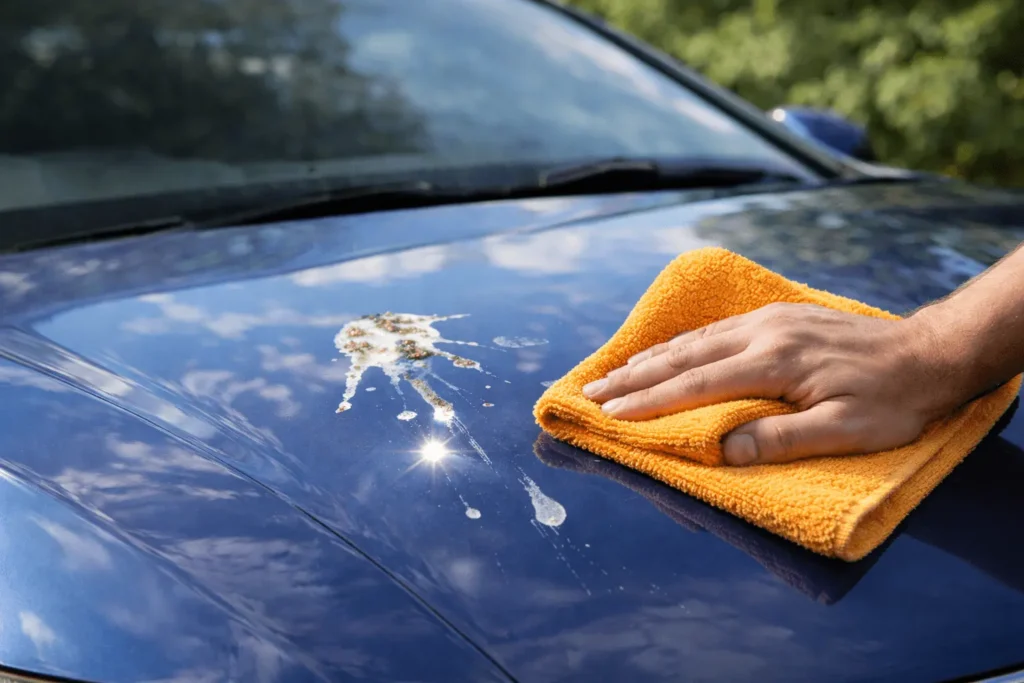
Bird poop should be removed from a car immediately using water, a microfiber cloth, and a non-abrasive cleaning solution. Fast removal prevents clear coat etching, staining, and permanent paint damage, especially in hot or sunny conditions.
Why Bird Poop Is Bad for Your Car
Bird droppings contain uric acid, nitrogen compounds, and digestive enzymes. These substances react aggressively with automotive clear coats. The damage begins within minutes under direct sunlight.
Automotive paint systems consist of a base coat and a transparent clear coat. Uric acid penetrates the clear coat and disrupts its polymer structure. This leads to discoloration, loss of gloss, and permanent etching.
Scientific studies on environmental paint damage confirm that acidic contaminants accelerate surface degradation, especially at temperatures above 30°C (86°F). Dark-colored vehicles absorb more heat, increasing reaction speed.
Why Quick Removal Matters
Time directly affects damage severity. Fresh bird droppings remain hydrated, allowing safe removal without abrasion. Once moisture evaporates, hardened residue bonds to the paint surface. This increases removal force requirements, raising the chance of scratches.
Heat, ultraviolet exposure, and surface porosity intensify chemical bonding. Vehicles parked outdoors experience faster degradation than garage-stored vehicles.
How to Clean Bird Poop Off Your Car
Removing bird droppings from a vehicle requires a controlled and surface-safe approach. The objective is to neutralize acidic residue while preventing friction that can damage the clear coat.
Bird droppings begin reacting with automotive paint almost immediately after contact, especially under heat exposure. Delaying removal allows acids to penetrate deeper into the clear coat, increasing the likelihood of etching and surface discoloration.
Tools and Materials You’ll Need
Correct sequencing and material selection are essential for safe removal. Automotive-grade materials designed for lubrication and gentle contact provide the safest results across paint, glass, and trim surfaces.
- Microfiber cloth (300-500 GSM)
- Clean water (ambient temperature)
- pH-neutral car soap
- Spray bottle
- Quick detailer spray
- Baking soda
- Soft foam applicator
- Clay bar (fine grade)
Method 1: Warm Water and Soap Technique
This technique is designed for fresh bird droppings that have not yet hardened or bonded to the paint surface. Warm water helps soften organic material, while a pH-neutral car soap reduces surface tension and provides lubrication during removal.
Steps
- Rinse the affected area using low-pressure water to remove loose particles and reduce surface friction.
- Apply a diluted car soap solution evenly using a spray bottle to maintain controlled coverage.
- Place a fully soaked microfiber cloth over the droppings to allow moisture penetration into the residue.
- Allow the area to soak for 3-5 minutes, ensuring the contamination loosens without drying.
- Lift the softened residue using straight, minimal-pressure motion to avoid disrupting the clear coat.
- Rinse thoroughly and dry the surface using a clean microfiber towel to prevent water spotting.
This method prioritizes hydration and lubrication, reducing friction and preserves the clear coat.
Alternative Safe Liquids for Fresh Droppings
Certain household liquids can assist in loosening fresh bird droppings when automotive cleaning products are unavailable.
Seltzer or Club Soda
Carbonated water releases dissolved gas upon contact, which helps break the bond between organic residue and the paint surface. When applied generously and allowed to dwell briefly, it improves residue lift while maintaining sufficient lubrication to reduce surface friction.
Baking Soda and Water
A baking soda and water mixture prepared at a 1:4 ratio provides mild acid neutralization without aggressive abrasion. This solution should be applied using a soft applicator and removed promptly to avoid residue buildup on the clear coat.
Method 2: Using a Quick Detailer Spray
Quick detailer sprays are made to safely lift light dirt and bird drops without scratching the paint. They add a slippery layer on the surface, which helps the residue come off easily during wiping.
Steps
- Spray the detailer directly on the bird poop so it is fully wet.
- Let it sit for 60-90 seconds to soften the residue.
- Wipe gently using straight lines, not circles.
- Turn the microfiber cloth often to avoid spreading dirt back onto the paint.
This method works best for light and fresh droppings and is ideal when a full car wash is not possible.
Method 3: Handling Dried or Stubborn Droppings
Dried bird droppings sticks more tightly to the car surface because it has lost moisture and hardened over time. Removing it safely requires softening the residue first instead of using force.
Baking Soda Solution
This method helps when residue remains after soaking.
- Lightly wet the area with clean water first.
- Mix baking soda and water into a thin paste.
- Apply it gently using a soft foam applicator.
- Lift the residue straight up, not sideways.
- Rinse the area right away with water.
When used carefully, this solution helps loosen residue without harming the paint.
WD-40 (Surface-Limited Use)
WD-40 can help loosen stubborn bird droppings by breaking the bond between the residue and the surface. Use it only on small spots and rinse the area well afterward. Avoid using it often, especially on protected or coated paint.
Method 4: Clay Bar for Deep Cleaning
Clay bars are used when bird poop leaves behind residue that normal washing cannot remove. They work by gently pulling stuck contaminants out of the clear coat without sanding or scratching the surface.
Steps
- Spray clay lubricant on the area to keep the surface slippery.
- Glide the clay bar back and forth in straight lines using light pressure.
- Check the clay often and fold it to expose a clean side.
- Stop once the surface feels smooth to the touch.
After using a clay bar, apply wax or another protective layer to restore surface protection.
Specialty Bird Poop Cleaning Wipes
Automotive cleaning wipes are made for quick cleanup when water or tools are not available. They are pre-moistened and safe for car surfaces, but they should only be used for short-term cleaning. A proper wash is still recommended afterward.
Fresh vs Dried Bird Droppings
Bird droppings behave differently depending on how long they stay on the car surface. Knowing the condition helps choose the safest cleaning method.
Immediate Steps for Fresh Droppings
- Rinse the area as soon as possible with water.
- Do not wipe the surface while it is dry.
- Always soften the droppings before touching the paint.
Safe Techniques for Dried Droppings
- Rehydrate the area using water or a cleaning spray.
- Never use sharp or hard tools to scrape the surface.
- Allow more soaking time instead of applying extra pressure.
Cleaning Bird Poop from Different Car Areas
Bird droppings affect different parts of a vehicle in different ways. Using the right method for each area protects surfaces and prevents damage.
Car Paint
Car paint is delicate and can be scratched easily. Always use microfiber cloths and lubricants when cleaning. Soften the droppings first with water or a cleaning solution, then gently lift the residue. Avoid scrubbing or circular motions to keep the clear coat intact.
Windows and Windshields
Glass is stronger than paint, but residue can leave streaks and reduce visibility. Use a soft cloth and ammonia-free glass cleaner to remove droppings safely. Wipe in straight lines and rinse thoroughly to avoid streaking.
Car Upholstery and Interior Surfaces
Bird droppings on seats, carpets, or other fabric surfaces require care. Blot the area gently rather than rubbing to prevent spreading acids deeper into the fibers. For leather, use a pH-balanced cleaner and wipe lightly.
Removing Bird Poop Stains and Etch Marks
Bird poop can sometimes leave stains or marks on car paint. This happens because the acids in it can go through the paint’s protective layer. Stains can make the paint look dull or rough.
Solutions
- Light stains: You can fix small marks with gentle polishing.
- Deeper stains: Sometimes a machine is needed to clean the marks properly.
- Serious damage: If the paint is really damaged, the car may need a repaint.
Using a Pressure Washer
Pressure washers can help remove tough dirt, but they must be used carefully.
- Keep the nozzle at least 18 inches (45 cm) away from the car.
- Use a wide spray, not a thin jet.
- High pressure too close can damage the paint.
How to Prevent Bird Droppings on Your Car
Stopping bird droppings before it happens keeps your car looking nice and saves work later. Here are some easy ways:
- A car cover completely protects your car when it is parked. It keeps dirt, and other things off the paint.
- Wax or ceramic coating makes a protective layer on your car. This layer makes it harder for droppings to stick and easier to clean.
- Where you park matters. Try not to park under trees, power lines, or places where birds like to sit. This lowers the chance of droppings on your car.
When to Call a Professional Car Detailer
Yes, sometimes it can cause damage that is hard to fix at home. You should call a professional when:
- You can see etching or marks on the paint even after washing.
- The paint looks discolored or faded in spots.
- Bird droppings keep happening in the same areas over and over.
Professional detailers use special tools and safe techniques to fix marks and protect your car without causing more damage.
Best Practices for Long-Term Paint Protection
To keep your car safe from bird droppings and other damage:
- Wash your car every 7-14 days to remove dirt and contaminants.
- Apply wax or protective coatings twice a year for a strong protective layer.
- Check your car’s paint after parking in areas with birds or other risks.
- Use clean microfiber cloths to avoid scratching the paint while cleaning.
Final Thoughts
Bird droppings represent a chemical threat to automotive paint systems. Immediate, hydrated removal using correct materials prevents irreversible damage. Preventive protection significantly reduces long-term surface degradation.
Will a car wash get bird poop off my car?
Yes, a car wash can remove bird poop if it is fresh. But if it has been sitting in the sun for a while, it might be too hard to come off. In that case, you need to soften it first before washing.
Does vinegar remove bird poop from a car?
Vinegar is acidic, so it can damage your car paint if used directly. It is safer to mix vinegar with water before using it. Even better, use gentle cleaners like soap, baking soda, or club soda to remove the droppings safely.
How do you get dried bird poop off your car?
Mix warm water with car soap and gently apply it to the dried bird poop. Let it sit for a few minutes to soften the droppings. Then wipe it off carefully with a microfiber cloth. This keeps your paint safe while cleaning.
