 Skip to content
Car paint is constantly exposed to sunlight, dust, water, road salt, and air pollution. Over time, these elements weaken the clear coat and reduce surface gloss. Car wax creates a protective layer that reduces paint damage and improves visual clarity. This guide explains how to wax a car in a clear, step-by-step format so the process is easy to follow and technically accurate.
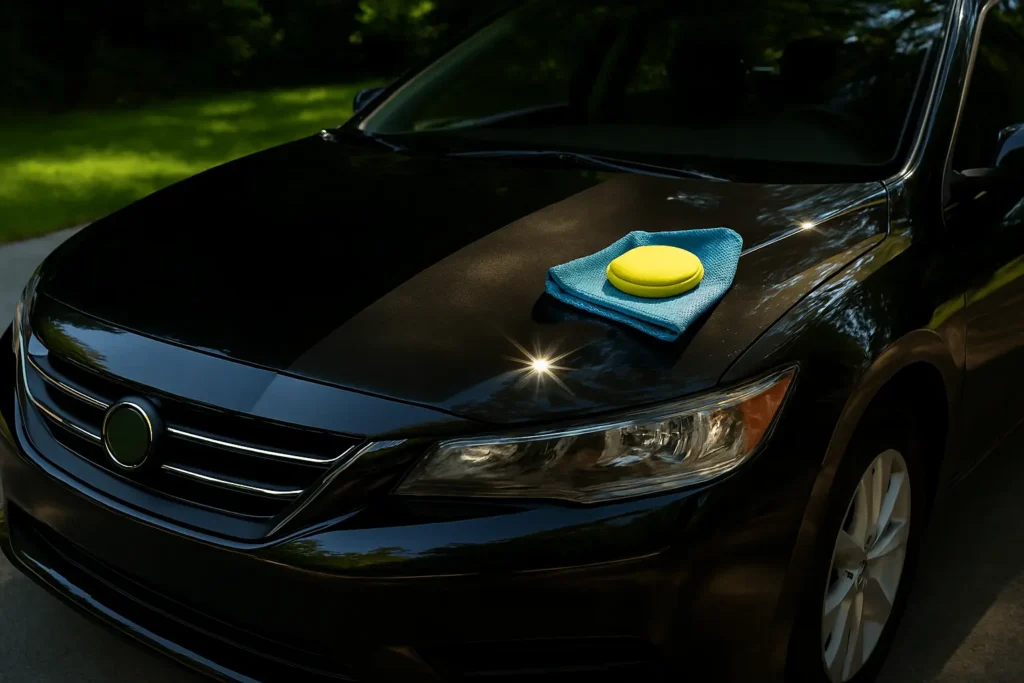
What Does Car Wax Do?
Car wax protects automotive paint by forming a thin barrier that reduces UV damage, oxidation, moisture penetration, and surface contamination while improving paint gloss and smoothness without changing the vehicle’s factory finish.
Choosing the Right Car Wax
Selecting the correct wax depends on usage frequency, application method, and paint condition. All wax types serve the same core function but differ in durability and ease of use.
Types of Car Wax
1. Spray Wax
Pros
- Fast application with minimal surface preparation, making it suitable for frequent use
- Works well as a maintenance layer between full waxing sessions
- Low risk of uneven buildup due to thin formulation
Cons
- Protects the paint for a short period against sun and chemicals
2. Liquid Wax
Pros
- Spreads evenly across paint surfaces, reducing missed spots
- Offers moderate protection against oxidation and moisture
- Compatible with both hand application and machine polishers
Cons
- Requires sufficient curing time to bond properly with the clear coat
3. Paste Wax
Pros
- Forms a thicker protective layer, improving resistance to water and UV radiation
- Delivers longer-lasting surface protection compared to liquid and spray wax
- Enhances paint depth when applied correctly
Cons
- Longer application time due to thicker consistency
- Requires careful buffing to prevent residue buildup
How to Wax a Car by Hand
Hand waxing offers controlled application and reduced risk of uneven coverage.
What You Need Before Waxing
- pH-neutral car shampoo
- Microfiber wash mitt
- Clean microfiber towels
- Foam or microfiber applicator pad
- Chosen car wax
Step 1: Prepare the Car for Waxing
Wash the vehicle thoroughly to remove dirt and road residue. Dry the surface completely. Wax should only be applied to a clean, dry surface. Residual debris reduces bonding and creates surface scratches.
Step 2: Apply the Wax
Apply a small amount of wax to the applicator pad. Spread it in straight or overlapping motions. Cover one panel at a time to ensure uniform thickness.
Step 3: Let the Wax Haze
Allow the wax to cure according to product instructions. The surface will appear slightly cloudy. This indicates proper bonding with the clear coat.
Step 4: Buff Off the Wax
Use a clean microfiber towel. Apply light pressure. Buff until the surface becomes smooth and reflective. Replace towels if saturation occurs.
How to Wax a Car Using a Machine Polisher
Machine waxing reduces physical effort and improves uniformity when used correctly.
Prepare the Car and Equipment
Ensure the vehicle is clean and dry. Use a soft finishing pad. Avoid cutting or polishing pads for wax application.
Step 1: Apply Wax to the Pad
Apply a small, even amount of wax directly to the applicator pad. The pad should be lightly coated, not saturated, to ensure controlled distribution and prevent product waste.
Step 2: Spread Wax on the Surface
With the machine powered off, gently spread the wax across the panel. This step ensures even initial coverage and reduces the chance of product sling once the machine starts.
Step 3: Apply Wax with Controlled Movement
Set the machine to a low speed. Move the polisher in slow, overlapping passes while maintaining steady pressure. Consistent motion helps achieve uniform bonding across the paint surface.
Step 4: Allow the Wax to Haze
Leave the wax undisturbed until a light haze forms. This curing phase allows the wax to bond properly with the clear coat and improves protection durability.
Step 5: Final Buffing
Use a clean microfiber towel to remove the hazed residue. Buff gently until the surface feels smooth and appears clear. Inspect the panel under proper lighting to confirm even removal.
Special Waxing Considerations
Waxing a Black Car
Black paint shows residue and swirl marks easily. Apply thin layers. Use clean towels. Inspect frequently during buffing.
Waxing Metallic Paint
Metallic paint benefits from uniform wax distribution. Avoid heavy buildup that can dull reflective flakes.
Waxing Matte and Satin Paint
Traditional wax is not suitable. Wax can create uneven shine. Use matte-safe surface protectants only.
Environmental Conditions
Wax should be applied:
- Out of direct sunlight
- Between 15°C and 25°C
- On a cool surface
High temperatures cause premature drying. Cold conditions prevent bonding.
Protecting Trim from Wax
Mask plastic and rubber trim before applying wax. Wax residue can stain or leave a cloudy film on these materials. Using painter’s tape or plastic wrap prevents accidental contact. Always check edges carefully to ensure full coverage protection.
Removing Wax from Trim
Use a trim-safe cleaner and a soft brush to remove wax residue. Avoid abrasive tools that can scratch or dull the surface. Work gently along edges and corners for thorough cleaning. Rinse afterward to remove any remaining cleaner for a smooth finish.
How Often Should You Wax Your Car?
Yes, waxing your car regularly is important. Here is a breakdown:
- For Daily Drivers & Outdoor Parkers: If your car stays outside often, is driven daily, or washed frequently, it may need waxing every 1-2 months, or even sooner.
- For Garage Kept Cars: If your car is kept in a garage, waxing every 3-4 months should be sufficient.
- General Rule: Most cars need waxing every 2 to 3 months to keep the paint protected. When water stops beading on the paint or the surface feels rough, it is time to wax again. This applies to most drivers and car owners.
Maintenance Between Waxing Sessions
Proper care between waxing helps the wax last longer. Wash your car using a gentle, pH-neutral car shampoo. Strong soaps can remove wax quickly.
- Avoid rough automatic car washes because they damage the protective layer.
- Clean dirt and bird droppings as soon as possible to protect the paint.
- Using spray wax between full wax jobs helps keep the surface smooth and water-repellent.
Conclusion
Car waxing is a protective maintenance process, not a cosmetic shortcut. Correct application improves paint longevity, reduces environmental damage, and maintains surface integrity when performed under proper conditions.
How long will wax last on a car?
Car wax usually lasts three to six months. The exact time depends on the type of wax and how often the car is washed. Liquid and spray wax wear off faster. These may need reapplying every 6 to 8 weeks.
Can I wax my car by myself?
Yes, you can wax your car at home. A machine polisher makes the job faster, but hand waxing also works well. With a little time and care, you can get a clean and shiny finish. You do not need special skills.
Can I wax my car in direct sunlight?
No, waxing in direct sunlight is not a good idea. Heat makes the wax dry too fast and spread unevenly. Always park in the shade or a garage. Cool surfaces help the wax work better and last longer.
